Moissanite
The Ultimate Guide to Moissanite
Emma Carter · May 20, 2026 · 2 min read
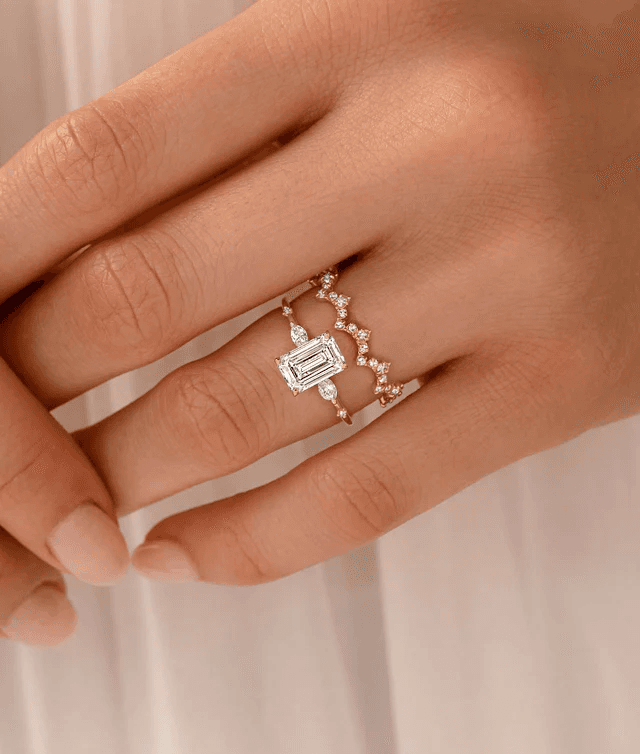
Moissanite has become one of the most popular choices for engagement rings, wedding bands, and fine jewelry, and for good reason. It's brilliant, durable, ethical, and a fraction of the price of a mined diamond. If you're researching moissanite, this guide covers everything you need to know to buy with confidence.
What is moissanite?
Moissanite was discovered in 1893 by French scientist Henri Moissan inside a meteorite crater. He first thought he'd found diamonds, and it took further analysis to reveal a distinct mineral, silicon carbide. Natural moissanite is extraordinarily rare, so virtually every moissanite on the market today is created in a lab. That makes it consistent, conflict-free, and far more affordable than a mined stone.
What makes moissanite special
Exceptional sparkle and fire
Moissanite has a higher refractive index than a diamond (2.65 to 2.69 vs 2.42), so it bends light more and produces more fire, those flashes of rainbow color. Many people find it even more eye-catching than a diamond.
Durability for everyday wear
On the Mohs hardness scale, moissanite scores 9.25, second only to diamond at 10 among common gemstones. It resists scratching and chipping, so it holds up beautifully to daily wear.
Ethical and sustainable
Because it's lab-created, moissanite avoids the environmental and ethical concerns sometimes associated with mining. It's a clear-conscience choice.
Outstanding value
Moissanite costs a small fraction of a comparable diamond, which means you can choose a larger or higher-quality stone for the same budget, or put the savings toward the setting, the wedding, or the honeymoon.
Moissanite color and clarity
Modern moissanite is typically available in colorless (DEF) and near-colorless (GH) grades. Because it's grown in controlled conditions, it's usually eye-clean, free of the visible inclusions you can find in mined stones. For a bright white look, choose a colorless grade.
How to choose the right moissanite
- Cut matters most, because it drives the sparkle. Choose a well-cut stone in the shape you love (round, oval, cushion, emerald, pear, and more).
- Carat and size: moissanite's affordability lets you go larger without stretching your budget.
- Color: DEF for the whitest look, GH for a warmer, still-beautiful stone at a lower price.
- Certificate: reputable moissanite comes with a certificate (such as GRA) documenting the stone.
Moissanite vs other stones
Still comparing options? Read Natural Diamond vs. Moissanite and Moissanite vs. Lab-Grown Diamond for honest, side-by-side breakdowns.
The bottom line
Moissanite delivers diamond-like beauty, real durability, and ethical sourcing at a fraction of the cost. Whether you want a classic solitaire or a one-of-a-kind custom design, it's hard to beat for value and brilliance.
Thinking about a custom moissanite piece? Get in touch and we'll help you choose the perfect stone and design.
Frequently asked questions
- Is moissanite a real gemstone?
- Yes. Moissanite (silicon carbide) is a genuine gemstone with its own distinct properties. It isn't fake or imitation, it simply isn't a diamond.
- Does moissanite last a lifetime?
- Yes. At 9.25 on the Mohs scale it's extremely hard and durable, making it well suited to everyday wear for a lifetime.
- Will moissanite test as a diamond?
- Most modern moissanite passes a basic thermal diamond tester, but a moissanite-specific tester will distinguish it. Reputable sellers never market moissanite as a diamond.
- How do I care for moissanite?
- It's low-maintenance. Warm water, mild soap, and a soft brush keep it sparkling, and it naturally resists oil and dirt better than a diamond.
Ready to design your own?
We create custom moissanite and lab-grown diamond rings and bands, made to order.
Get a Quote